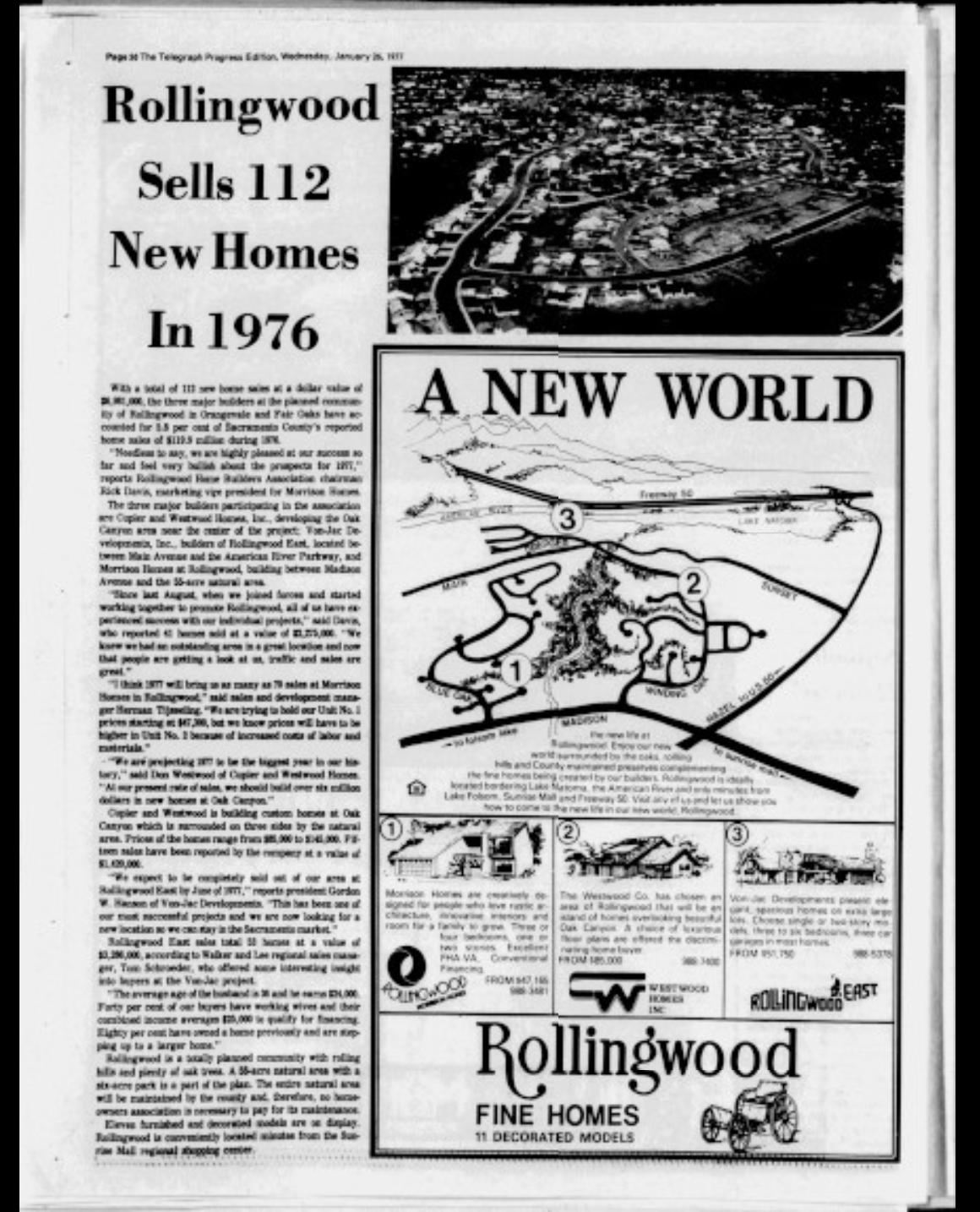
Rollingwood’s story of growth began taking shape in the 1970s, as homebuyers discovered the appeal of this planned community in Orangevale and Fair Oaks. In 1976, Rollingwood recorded 112 new home sales totaling nearly $7 million, representing 5.8 percent of Sacramento County’s reported home sales that year. The strong sales reflected growing interest in the community’s location, natural surroundings, and variety of homes.
A Strong First Year of Home Sales
In 1976, the three major builders at Rollingwood reported a combined 112 home sales valued at $6,981,000. At the time, this represented a notable share of Sacramento County’s residential home sales. Rick Davis, chairman of the Rollingwood Home Builders Association and marketing vice president for Morrison Homes, expressed confidence in the community’s early success and its prospects for the year ahead.
Three Builders Helped Shape the Community
Rollingwood’s early development brought together three major homebuilders, each contributing to a different area of the planned community. Cupler and Westwood Homes developed the Oak Canyon area near the center of the project, Von-Jac Developments built Rollingwood East between Main Avenue and the American River Parkway, and Morrison Homes developed homes between Madison Avenue and the 55-acre natural area. Working together to promote Rollingwood helped each builder gain momentum and introduce more homebuyers to the community.
A Variety of Homes for Different Buyers
The three builders offered a range of homes and price points. Morrison Homes reported 41 sales valued at $2,275,000, with initial prices in its first unit starting at $47,300. Cupler and Westwood Homes reported 15 sales totaling $1,420,000, offering custom homes in Oak Canyon priced between $85,000 and $145,000. Meanwhile, Von-Jac Developments recorded 53 sales valued at $3,286,000 in Rollingwood East, making it the largest contributor to the community’s 1976 sales total.
Buyers Were Looking for More Space and a New Community
The original sales reports also offered a glimpse into the people choosing Rollingwood. According to a regional sales manager for the Rollingwood East development, many buyers were established homeowners looking to move into larger homes. At the time, 80 percent of buyers had previously owned a home, while 40 percent had working wives. These details reflected the variety of households drawn to Rollingwood during its early years.
A Planned Community Surrounded by Nature
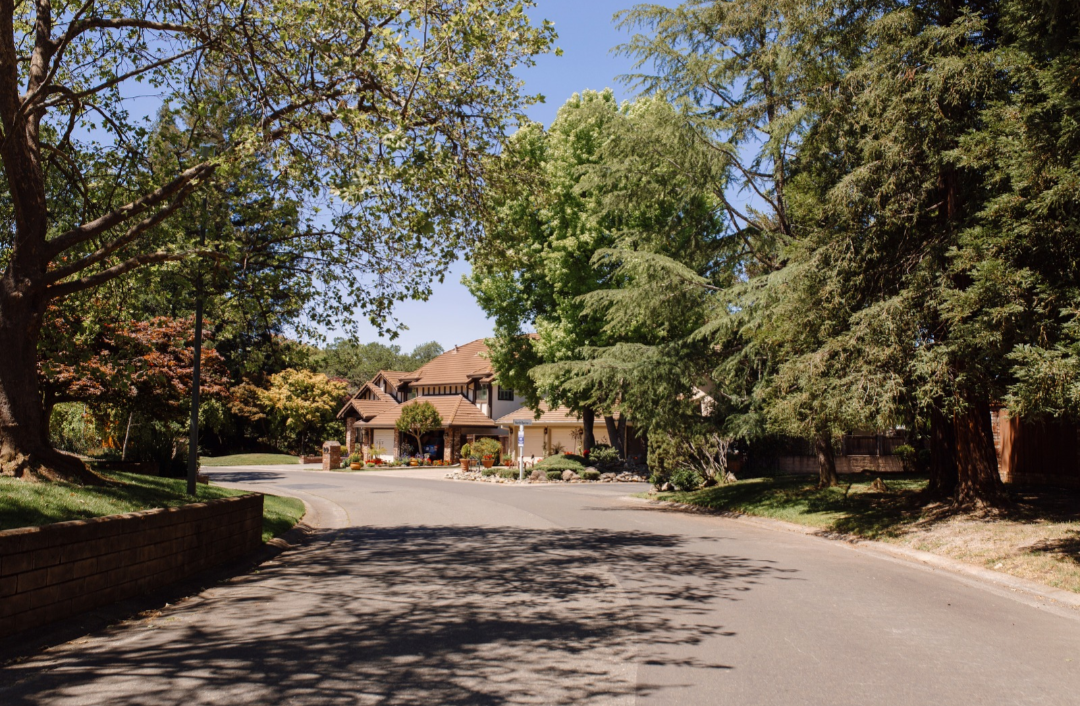
Beyond its homes, Rollingwood was promoted as a thoughtfully planned community featuring rolling hills, mature oak trees, and a 55-acre natural area that included a six-acre park. The natural area was planned for county maintenance, meaning residents would not need a homeowners association to fund its upkeep. With 11 furnished and decorated model homes on display and Sunrise Mall just minutes away, Rollingwood offered homebuyers a combination of natural surroundings, neighborhood amenities, and convenient access to shopping.
A Community Built on a Vision
The 112 homes sold in 1976 marked an important chapter in Rollingwood’s early development. The builders were already looking ahead to 1977 with ambitious sales expectations, while the community continued to take shape around its homes, parks, and preserved natural spaces. More than a collection of new houses, Rollingwood was being introduced as a planned community designed to bring residential living and the surrounding landscape together; a vision that continues to be part of its identity today.